
SpaceX Starship: Why Elon Might Actually Be Right This Time
I know, I know. "Elon said a thing, it must be 5 years late and twice as expensive as promised." Fair criticism, honestly.
But here's the thing about Starship: it's already flying. It's already working. And it might be the most important machine humanity has ever built.
Let me explain why this giant shiny tube matters more than you think.
What Is Starship, Actually?
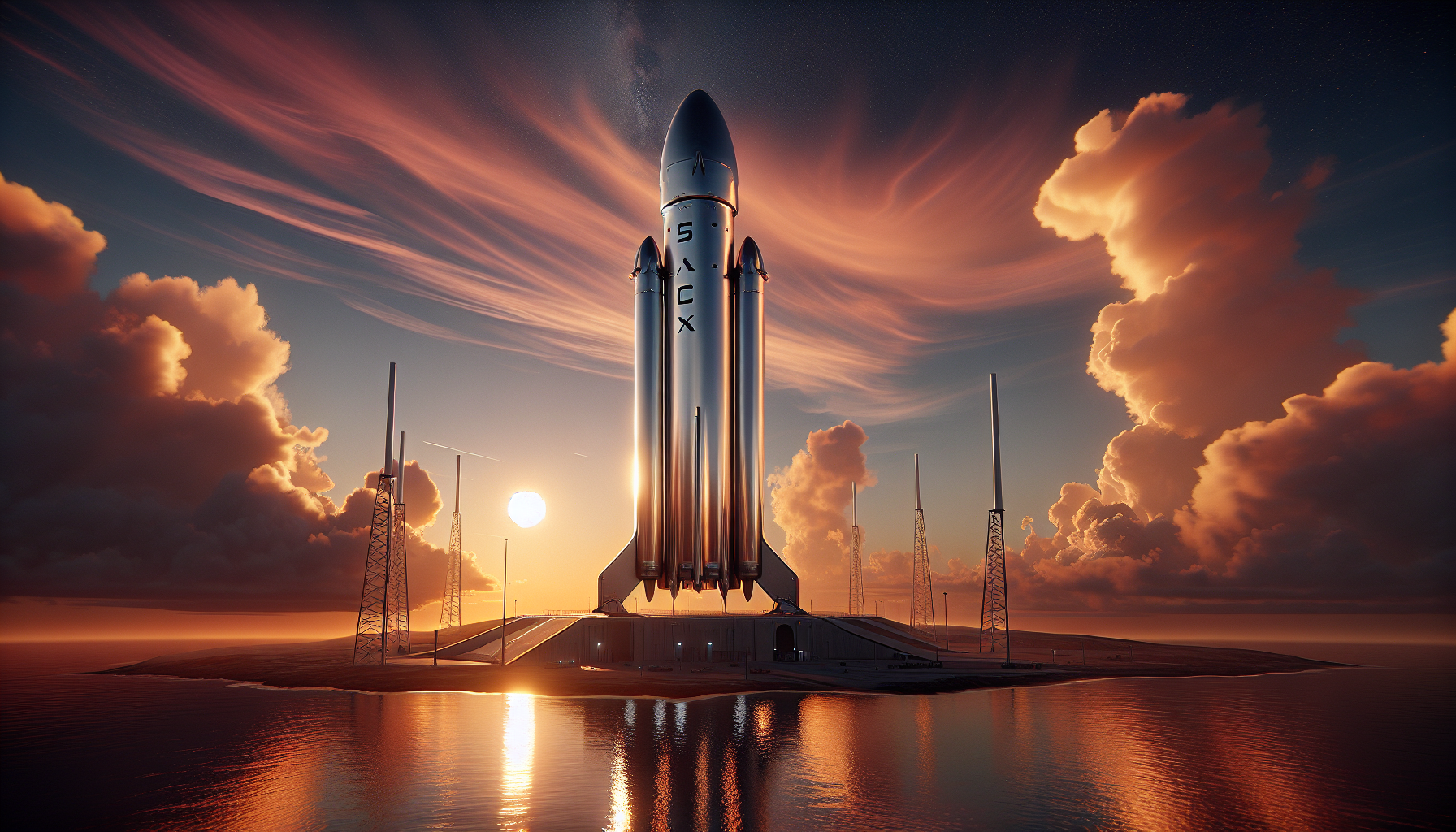
Starship is the largest and most powerful rocket ever built. Period. It makes Saturn V (the Moon rocket) look small. It makes the Space Shuttle look like a toy.
But size isn't why it matters. Reusability is.
The "Airplane Revolution" Analogy
Imagine if every time you flew from New York to London, the airline threw away the plane after landing.
That's how rockets have worked for 70 years. Build it, launch it, crash it into the ocean, repeat. A single Falcon 9 launch used to cost $60 million. The rocket itself? Maybe $40 million of that.
SpaceX already changed this with Falcon 9 — they land and reuse the first stage. But Starship takes it further: the entire rocket comes back and flies again.
• Old rockets: $10,000+ per kg to orbit
• Falcon 9 (reusable): ~$2,700 per kg
• Starship (target): ~$20-100 per kg
That's a 100-500x reduction. It changes everything.
What Cheap Space Access Enables
When something becomes 100x cheaper, it's not just "better" — it enables entirely new things:
- Space tourism becomes middle-class accessible (not billionaire-only)
- Space manufacturing becomes economically viable (zero-G factories)
- Satellite internet becomes actually good (Starlink v2 needs Starship)
- Moon bases become realistic (can ship real supplies)
- Mars colonization becomes possible (need massive cargo capacity)
The Current Status (January 2026)
First orbital attempts. Explosions. Lots of explosions. "Rapid unscheduled disassembly."
Successful orbit! Booster caught by "chopsticks" (yes, really). The internet lost its mind.
Multiple successful flights. Starlink deployment begins. NASA pays for Moon missions.
Regular launches. Refueling tests. Things are actually working.
Why Skeptics Were Wrong (This Time)
I've seen the arguments:
"It'll never work" — It's literally working. We watched it.
"It's too big" — That's... the point. Bigger = more payload = lower cost per kg.
"The schedule is always late" — True! But "5 years late" on an impossible goal is still an impossible goal achieved.
"Elon is crazy" — Also true! But crazy people sometimes do crazy things that work.
The Competition (Or Lack Thereof)
| Rocket | Payload | Reusable? | Status |
|---|---|---|---|
| Starship | 150 tons | Fully (target) | Flying ✅ |
| SLS (NASA) | 95 tons | No | $4B per launch 😬 |
| New Glenn (Blue Origin) | 45 tons | Partially | Testing |
| Long March 9 (China) | 150 tons | Planned | 2030s |
SpaceX is so far ahead that everyone else is competing for second place.
What This Means For You
If you're interested in space: This is the most exciting time to be alive since Apollo.
If you're in aerospace: SpaceX is hiring. Their competitors are hiring faster to catch up.
If you're an investor: SpaceX is private, but space infrastructure companies are public (satellite operators, suppliers).
If you don't care about space: You will when Starlink gives you gigabit internet in rural Montana, or when point-to-point rockets fly you from NYC to Tokyo in 45 minutes.
The Honest Risks
Let's not pretend everything is perfect:
- Regulatory risk: FAA can slow things down. Environmental concerns are real.
- Technical risk: Full reusability isn't proven yet at scale.
- Elon risk: He gets distracted. A lot. (See: Twitter/X)
- Market risk: Is there actually $100B+ demand for space access?
Final Thoughts
Starship isn't just a rocket. It's a civilization-level technology. It's the difference between being stuck on one planet and having options.
I'm not saying Elon is always right. He's often wrong, late, or both. But on this one thing — making space access cheap — he might actually pull it off.
And if he does, we'll look back at this decade the way we look back at the Wright Brothers: the moment everything changed.
Now if you'll excuse me, I need to check if my Starlink pre-order has shipped yet. 📡🚀