
CRISPR and Designer Babies: Are We Playing God or Just Fixing Bugs?
In 2018, a Chinese scientist named He Jiankui did something unprecedented: he edited the genes of human embryos to make them HIV-resistant. Twin girls, Lulu and Nana, were born with modified DNA.
The world's reaction: Holy shit. What did you just do?
He Jiankui went to prison. But the genie was out of the bottle. Gene editing works. The only question now is: how far do we take it?
CRISPR 101: The Basics
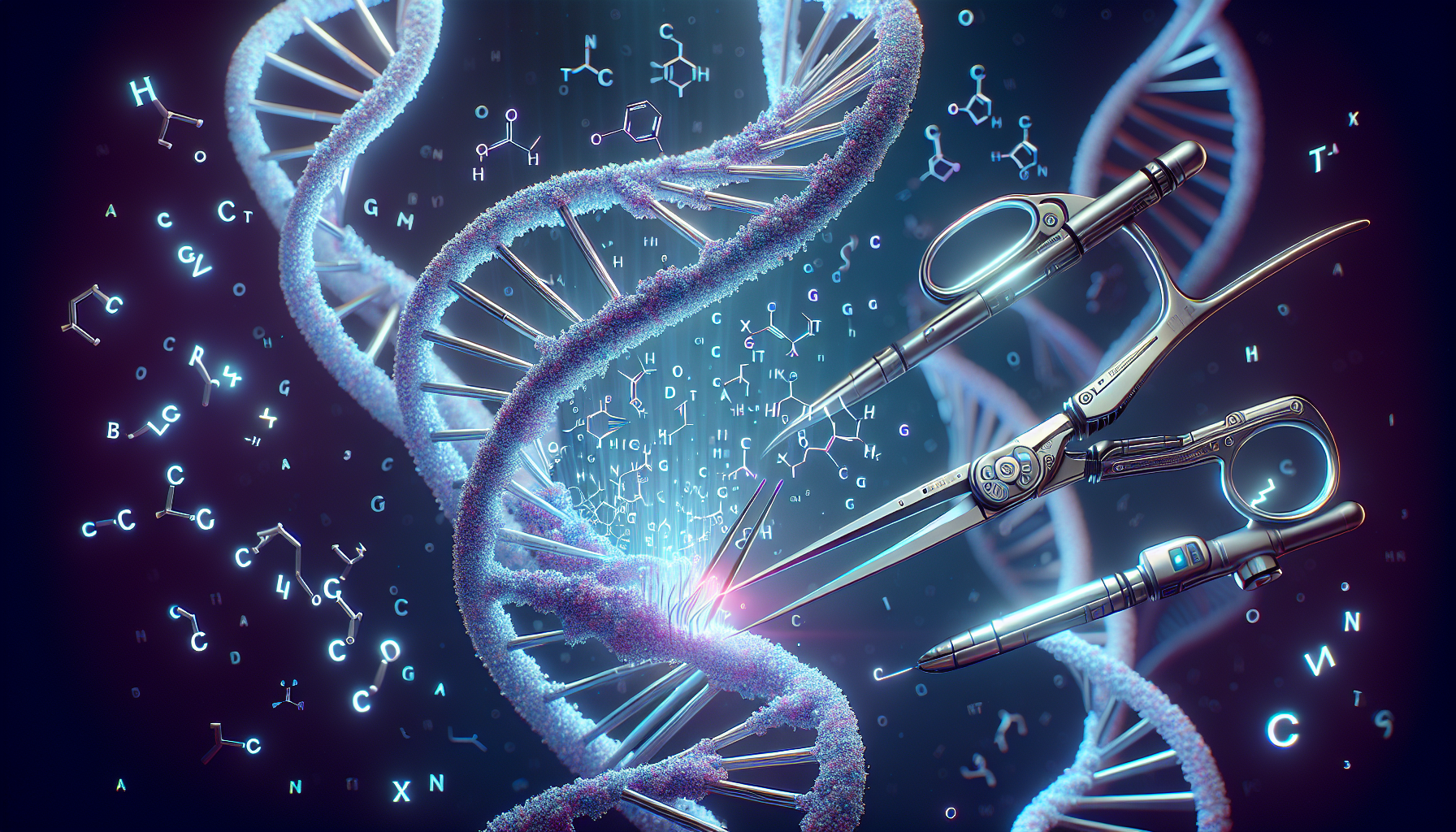
CRISPR (Clustered Regularly Interspaced Short Palindromic Repeats — try saying that three times fast) is essentially a "find and replace" for DNA.
Think of your genome as a 3-billion-letter document. Before CRISPR, editing it was like trying to fix a typo using a hammer. Now we have molecular scissors that can cut at exactly the right spot.
1. Guide RNA finds the target sequence (the "find")
2. Cas9 enzyme cuts the DNA at that location (the "cut")
3. Cell's repair mechanism fixes the cut (the "replace")
4. You've just edited a gene. Congratulations, you're playing God.
The Three Levels of Gene Editing
Level 1: Curing Diseases (We're Already Here)
🌈 The Feel-Good Stuff
CRISPR is already being used to treat:
- Sickle cell anemia — First CRISPR therapy approved in 2023!
- Beta thalassemia — Blood disorder, now treatable
- Certain cancers — CAR-T cells modified to fight tumors
- Hereditary blindness — Clinical trials ongoing
This is the "no ethical dilemma" zone. Someone has a genetic disease that makes their life miserable. We can fix it. Who could object?
Almost nobody. This is just medicine with better tools.
Level 2: Editing Embryos (Here's Where It Gets Spicy)
The difference between editing a living person and editing an embryo is huge:
- Edit a person: Changes affect only them
- Edit an embryo: Changes pass to ALL future generations
This is called "germline editing" and it's currently banned in most countries. But the technology exists. Someone, somewhere, will use it.
Level 3: Enhancement (The Sci-Fi Stuff)
This is where we go from "fixing bugs" to "adding features":
- Higher IQ
- Better memory
- Enhanced athletic ability
- Disease resistance
- Slower aging
- Perfect eyesight
- Custom eye/hair color
We're not there yet. Most traits are controlled by hundreds of genes interacting in complex ways. But the technology is improving fast.
The Designer Baby Debate
| Argument | Pro | Con |
|---|---|---|
| Disease Prevention | Eliminate genetic diseases forever | What counts as a "disease"? |
| Parental Choice | Parents already choose schools, nutrition... | Child can't consent to genetic changes |
| Human Potential | Why not make humans better? | Who defines "better"? |
| Equality | Could eventually be available to all | Will be expensive first — rich get enhanced |
| Evolution | We already intervene (medicine, glasses) | Unknown long-term consequences |
The Scenarios: Where This Could Go
🌈 Best Case: The Medical Miracle
2040: All serious genetic diseases are detectable and fixable before birth. Huntington's, cystic fibrosis, Tay-Sachs — gone. Cancer risk genes are edited out. Human suffering is dramatically reduced. Enhancement is heavily regulated but allowed for disease prevention.
⚖️ Realistic Case: The Messy Middle
2040: Medical gene editing is common in rich countries. A black market for "enhanced" embryos exists. Some countries ban it entirely; others allow it. "Gene tourism" becomes a thing. Debates about "genetic haves and have-nots" dominate politics.
😬 Worst Case: Gattaca Becomes Real
2040: Wealthy families edit their children for intelligence, beauty, and health. A genetic underclass emerges. "Natural" humans can't compete for jobs, partners, or opportunities. Society fractures along genetic lines. The movie Gattaca was supposed to be a warning, not a roadmap.
What's Actually Happening Now (2026)
CRISPR-Cas9 discovered by Doudna and Charpentier. The gene-editing revolution begins.
He Jiankui creates first gene-edited babies. World freaks out. He goes to prison.
First CRISPR therapy (Casgevy) approved for sickle cell disease. The medical era begins.
Multiple CRISPR therapies in trials. Embryo editing still banned. But research continues...
The Countries to Watch
Not every country has the same rules:
- USA: Embryo editing banned from federal funding, but private research continues
- UK: Research allowed, clinical use banned (for now)
- China: After the He Jiankui scandal, officially restricted. But China moves fast...
- Russia: A scientist announced plans to edit embryos. Minimal oversight.
- Singapore: Positioning as a biotech hub. Flexible regulations.
My Honest Take
Here's where I land on this:
Curing genetic diseases? 100% yes. This is just medicine. No ethical person would argue that children should suffer from preventable diseases.
Preventing serious conditions in embryos? Probably yes, with regulation. If you can prevent your child from having Huntington's disease, why wouldn't you?
Enhancing traits like intelligence or athleticism? This is where I get nervous. Not because enhancement is inherently wrong, but because:
- We don't fully understand the trade-offs
- It will create inequality if only rich people can afford it
- There's no consent from the person being edited
But here's the thing: it's going to happen anyway. The technology is too powerful, too accessible, and too tempting. The question isn't "should we?" It's "how do we do it responsibly?"
What This Means For You
If you're thinking about having kids: In 10-20 years, genetic screening and basic editing will likely be routine. Your children might have options we can't imagine.
If you're in biotech: This is the biggest opportunity since the internet. Ethics training recommended.
If you're just curious: Read up on the science. The decisions we make in the next decade will shape humanity for millennia.
Final Thoughts
We're the first generation in human history with the power to directly edit our own species. That's terrifying and exciting in equal measure.
Are we "playing God"? Maybe. But we've been doing that since we invented medicine, agriculture, and smartphones. CRISPR is just the latest tool.
The question isn't whether to use this power. It's whether we'll be wise enough to use it well.
Now if you'll excuse me, I need to go argue about this on the internet for another 3 hours. 🧬💬