Facebook Ads for Local Business in 2026: The Playbook That Gets Appointments
We've audited about 50 local business ad accounts over the past year. Same mistake in almost every one: they run strategies built for e-commerce brands shipping worldwide. A dentist in Phoenix doesn't need a 14-day retargeting funnel with dynamic product ads. She needs appointments from people within 15 miles who have a toothache right now.
This guide covers what works for brick-and-mortar businesses, service providers, and anyone whose customers drive to a physical location.
Why Facebook Ads Work for Local Business
Google Ads catches people already searching. Facebook creates demand from people who fit your customer profile but weren't looking yet.
The math for local:
- Your serviceable area has 50,000-500,000 people
- 5-20% need what you sell in any given month
- Facebook reaches them for $5-30/day
- One new client pays back weeks of ad spend in a single visit
A restaurant fills empty Tuesday tables. A chiropractor books new patient exams. A gym sells January memberships. In our experience, local businesses see 3-8x return on ad spend because lifetime customer value runs high relative to acquisition cost. One $12 lead can become a $4,000/year dental patient.
Setting Up Your Local Campaign Structure
Campaign Objective Selection
Three objectives work for local. Pick one.
Leads (services). Dentists, lawyers, HVAC, plumbers, real estate agents. You want form fills or calls. Facebook's lead form ads keep people on-platform. We've seen cost per lead drop 40% compared to sending traffic to a landing page.
Traffic (restaurants, retail, events). Send people to your Google Maps listing, online menu, or event page. Use this when the next step is physical: show up, walk in.
Awareness (brand new businesses). When nobody knows you exist. Run for 2-3 weeks, then switch to leads or traffic. Don't stay here. Awareness doesn't fill your appointment book.
Geographic Targeting: Your Unfair Advantage
E-commerce advertisers envy this. You can target with a precision they'll never match:
Radius targeting. Drop a pin on your location. 5 miles for urban, 15 for suburban, 25+ for rural. This alone eliminates 99% of wasted spend.
Zip code targeting. When your customers cluster in specific neighborhoods. A high-end salon targets affluent zip codes. A discount store targets others.
Exclude areas. Remove places you don't service. A plumber who won't drive past Route 9 excludes everything beyond it. We've seen this save 15-25% of budget for service businesses.
"People living in" vs "People recently in." Critical. "Living in" gets residents. "Recently in" catches tourists and commuters. Restaurants in tourist areas want "recently in." A family dentist wants "living in." We've seen businesses waste thousands because they picked the wrong option and targeted passing truckers.
Audience Layering for Local
Stack geography with one or two filters. Not more.
- Radius + Homeowner status = HVAC and roofing goldmine
- Radius + Parents with teens + Income bracket = Orthodontist audience
- Radius + Recently moved = Every home service provider's best lead source
- Radius + Engaged shoppers + Women 25-54 = Salon sweet spot
Three filters maximum. Your geographic area already limits pool size. Add too many layers and Facebook's algorithm starves. We like audiences between 30,000 and 200,000 for local campaigns. Below 20,000, delivery gets inconsistent.

Ad Formats That Convert Locally
Lead Form Ads (Instant Forms)
Best format for service businesses. Period. Zero friction, no landing page needed, no website required. The person taps your ad, sees a pre-filled form (Facebook pulls name, email, phone from their profile), hits submit. Done.
What we've learned running lead forms for local clients:
- "Higher intent" form type cuts volume 30-40% but triples quality. Worth it for high-ticket services.
- Ask only what you need. Name, phone, one qualifying question. Each extra field costs you 10-15% of submissions.
- The qualifying question filters tire-kickers: "When do you need service?" with options "This week / This month / Just researching." This alone separates hot from cold.
- Custom thank-you screen with your phone number. Say "Call us now to schedule." About 10% do it immediately.
- Speed-to-lead: call within 5 minutes and close rate triples. Zapier or native CRM integration handles notification.
Image Ads with Local Signals
Your ad creative needs to scream "local." Generic stock photos of smiling people get ignored.
What performs:
- Photo of your actual storefront or team
- Before/after shots of real work (contractors, landscapers, salons)
- Food photos from your kitchen, not a stock library
- Your face, if you're the business owner (personal service providers)
The copy should name your city or neighborhood. "Serving Scottsdale families since 2019" outperforms "Quality dental care for your family" by 2-3x CTR in our tests. People trust local.
Video Ads for Local
Under 30 seconds. Show your space, your team, your work happening.
- 15-second business tour
- Customer testimonial shot in your location
- Before/after transformation
- Quick tip that builds trust
Vertical 9:16 for Stories and Reels. Phone quality with good lighting beats studio production. Tested this multiple times. Authentic and rough outperforms polished and corporate for local businesses every time.
Offer Ads and Event Responses
Facebook's offer format shows a "Get Offer" button and reminds people before expiration. Use for first-visit discounts, seasonal promos, grand openings.
Event Response ads work for classes, workshops, open houses. People who respond get reminded by Facebook. Free retargeting, basically.
Budget Strategy for Local Business
Minimum Viable Budget
$10/day is the floor. Below that, Facebook can't gather enough data. You need to reach at least 1,000 people daily in your area for optimization to work.
Budget by Business Type
Service businesses (plumber, dentist, lawyer). $15-50/day. You need 3-5 leads daily. At $5-15 per lead in most markets, budget accordingly. Start at $20/day, adjust after a week of data.
Restaurants/cafes. $10-25/day. You're driving foot traffic. Reach and frequency matter more than conversion optimization. Schedule ads around lunch and dinner.
Retail stores. $15-40/day. Mix awareness on weekdays with conversion-focused ads before weekends when people shop.
Gyms/fitness. $20-60/day. Triple your budget in January and September. Scale back in summer. These seasonal swings are predictable and worth planning around.
Weekly Rhythm
Match spending to buying behavior:
- Tuesday-Thursday. Regular spend. People plan and research.
- Friday-Saturday. Bump 50%. People are out making decisions.
- Sunday. Normal. Browsing and planning the week.
- Monday. Lowest. People are heads-down at work.
If you can't answer calls 24/7, schedule ads only during business hours. Leads from 2 AM cost the same but convert far worse because you call back 8 hours late.
The Follow-Up System
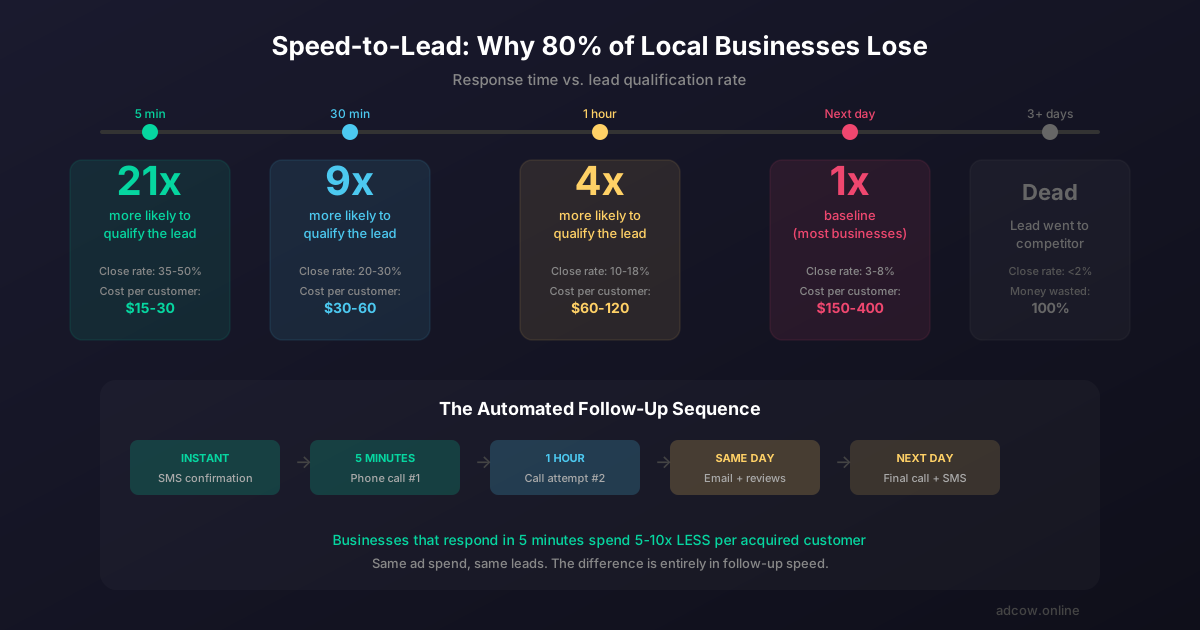
This is where 80% of local businesses blow it. They run ads, get leads, then respond next Tuesday.
Speed Matters More Than Anything
- Call within 5 minutes: 21x more likely to qualify the lead (MIT research, replicated in our accounts)
- Call within 30 minutes: Still workable
- Call next day: The lead is cold. Your competitor called them yesterday.
Automated Sequence
Set this up before turning on ads:
- Instant. SMS: "Thanks! Someone from our team will call within 10 minutes"
- 5 minutes. Phone call from your team
- 1 hour (no answer). Second attempt
- Same day. Email with your info, directions, and review links
- Next day. Final call + SMS
- Day 3. Offer or educational content to re-engage
Metrics That Matter
Forget CTR and CPM. Local business KPIs:
- Cost per lead. What does one form fill or call cost?
- Cost per appointment. How many leads show up?
- Cost per new customer. How many appointments convert?
- Lifetime value. What does an average client spend over 2 years?
When cost per customer stays below 20% of first-year value, you have a profitable system. We've seen local businesses run this for years without touching the setup once profitability stabilizes.
Common Mistakes
Targeting too wide. "Everyone within 50 miles aged 18-65" is Facebook's default suggestion. Ignore it. Be specific.
No phone number in ads. Local customers want to call. Put your number in the copy. Sounds obvious, but we see accounts without it weekly.
Sending to homepage. Your homepage has a menu, an about page, blog links, twelve distractions. Use lead forms or a single-purpose landing page.
Running one ad for months. Local audiences are small. They exhaust faster. Refresh creative every 2-3 weeks.
Ignoring organic. Post 3-5 times per week on your Facebook page. Paid ads convert better when your page looks alive. People check.
No social proof in ads. Reference your rating. "Rated 4.9 by 200+ local families" adds trust that generic copy can't match.
Advanced Tactics
Geo-Conquest
Drop a pin on your competitor's location. Target a 1-mile radius. Their customers see your ads. Works well for restaurants, gyms, retail. We've tested this for a pizza place and they pulled 15% of foot traffic from the chain next door within a month.
Weather-Triggered Budget Rules
- HVAC: boost during heat waves and cold snaps
- Roofing: increase after storms
- Ice cream shops: sunny day campaigns
- Indoor activities: rainy day specials
Set automated rules in Ads Manager. Budget goes up when the forecast triggers buying behavior.
Local Event Piggybacking
Major events bring people to your area. Increase budget during festivals, sports games, conventions happening nearby. A bar near a stadium triples spend on game nights and 4x's their normal revenue from walk-ins.
Seasonal Calendar
- January. Fitness, organization, financial services, home improvement
- February. Restaurants, florists, gift shops, spas
- March-April. Landscaping, cleaning, HVAC maintenance
- May-June. Pools, outdoor dining, wedding vendors, summer camps
- July-August. Back to school, tutoring, family activities
- September. Fitness again, fall home prep
- October-December. Holiday retail, catering, event venues
FAQ
How much should a local business spend on Facebook Ads per month?
Start at $300-600/month ($10-20/day). Test for two weeks. Once you find what converts, scale to $1,000-3,000/month. Most local businesses we work with profit well between $500-1,500/month.
How long until results?
First leads arrive within 48 hours if your targeting is right. Give the campaign 7-14 days before making judgment calls. Facebook's algorithm needs data to optimize delivery.
Should I boost posts or use Ads Manager?
Ads Manager. Always. Boosted posts give you almost no targeting control and zero optimization options. They exist so Facebook can take money from people who don't know Ads Manager exists.
Do I need a website?
No. Lead Form ads work without one. But a Google Business Profile and a basic landing page improve trust. People Google you after seeing the ad. Make sure they find something.
Facebook or Instagram for local?
Both. Same Ads Manager runs them. Facebook skews 35-65+. Instagram skews 18-44. Let the algorithm decide placement unless you know your customers live on one platform.
My competitor already runs ads. Can I still win?
Yes. Local advertising isn't winner-take-all. Multiple businesses profitably advertise in the same area. Better creative and faster follow-up beat bigger budgets. We've seen $15/day accounts outperform $100/day competitors who had sloppy follow-up.